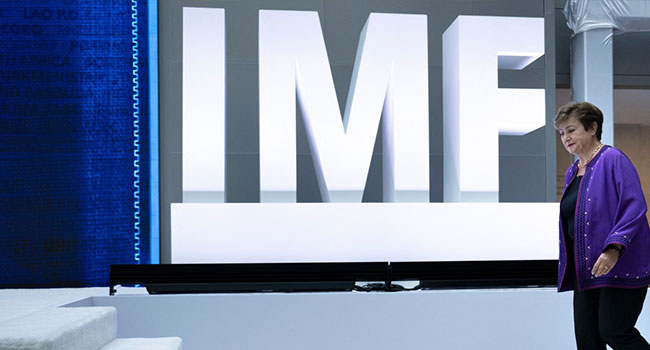
The US tariff rate now averages 20.1 per cent, the highest level since the early 1910s — except for a brief spike earlier this year — after new duties took effect Thursday, World Trade Organisation (WTO) and International Monetary Fund (IMF) data showed Friday.
The figure, calculated by the WTO and the IMF, stands in contrast with the 2.4 per cent rate in force at the time of President Donald Trump’s inauguration on January 20.
Trump’s April 2 announcement of “reciprocal” tariffs on the United States’ main trading partners and subsequent escalations, particularly on Chinese goods, briefly drove the average rate to 24.8 per cent in May, a figure unseen since 1904, according to data from the United States International Trade Commission (ITC).
READ ALSO: Tariff: Trump Says ‘Billions Of Dollars’ Now Flowing Into US’
A trade “truce” brought down sky-high tariff levels that the United States and China had imposed upon one another, but that is set to expire next week.
The new figure by the WTO and IMF takes into account the trade deals the United States negotiated with the European Union, Japan, South Korea, and other nations that have now come into force.

These deals usually included lower tariff levels than Trump threatened in April, but were higher than the baseline 10 per cent rate the US introduced.
The rate calculated by the WTO and the IMF applies the latest rates to 2024 trade volumes.
The updated average tariff rate exceeds the nearly 20 per cent rate that the United States applied in the 1930s, a period of high tariffs that economists widely consider behind the severity and duration of the Great Depression.
Trump said early Thursday that “billions of dollars in tariffs” were flowing into the United States after his August 7 deadline for implementing new duties.
Taking to his Truth Social platform just after midnight, he posted, “IT’S MIDNIGHT!!! BILLIONS OF DOLLARS IN TARIFFS ARE NOW FLOWING INTO THE UNITED STATES OF AMERICA!”
As an executive order signed last week by Trump took effect, US duties rose from 10 per cent to levels between 15 per cent and 41 per cent for a list of trading partners.
Many products from economies including the European Union, Japan, and South Korea now face a 15-per-cent tariff, even with deals struck with Washington to avert steeper threatened levies.
But others like India face a 25-per-cent duty — to be doubled in three weeks — while Syria, Myanmar, and Laos face staggering levels at either 40 per cent or 41 per cent.
AFP